Trading does not require looking at candlestick charts until you can no longer see. It is about making smart, calculated choices that keep your account alive as profits begin to roll in.
And what is the golden compass every trader ought to have with them? That is the Risk-to-Reward Ratio (RRR).
Consider it the seatbelt of your trading car: you may not be particularly aware of it when things are running smoothly. But when the market swings sharply, it is the only thing keeping you from the window.
The risk-to-reward ratio may not sound exciting, but it is one of the most important tools in trading. It differentiates a disciplined trader from a gambler who sits for hours at a chart.
Suppose you are in your favorite restaurant, which sells pizza. The owner says:
Take a chance on one pizza, and if it turns out well, I will return two pizzas to you. Otherwise, you lose the one you dared.
Here's how it plays out:
Win: You take home two hot and cheesy pizzas.
Lose: You forego one pizza, but that’s all.
Now, even if you only win half the time, you’ll still end up ahead. Each victory earns you two pizzas, and one defeat deprives you of one pizza. You now have two pizzas remaining, more than you had initially.
That’s exactly how the reward-to-risk ratio works in trading. You do not have to win all the time, but you have to have more wins than losses.
And let us be fair, who would not take that bet?
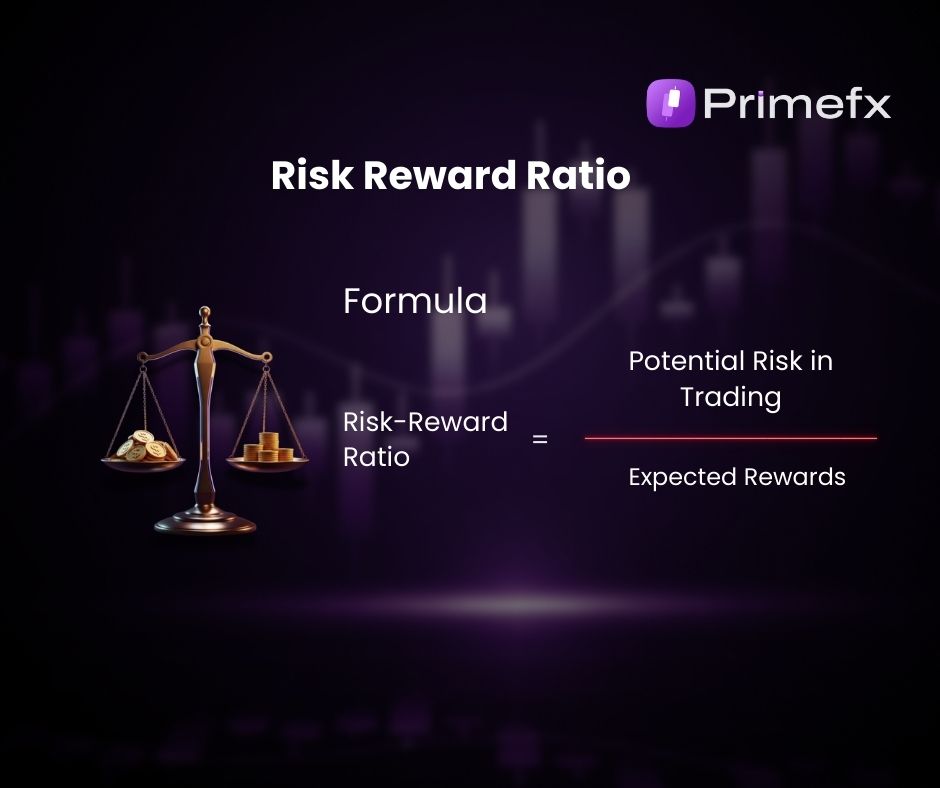
The risk-to-reward ratio indicates the amount of profit you are about to gain relative to the amount of profit you are prepared to lose.
Risk-to-reward Ratio = Potential Profit/Potential Loss.
Example: When there is a 1-in-2 chance of losing $100 for a possible gain of $200, the RRR is 1:2.
Trading is not about being right but about making money even when you are wrong half the time. The risk-to-reward ratio is the key that makes it possible.
Imagine a carnival game in which you roll a die. If you lose, you hand over $10. If you win, you pocket $20.
With a 1:1 ratio, you would have to win over half the rolls to remain in the game.
With a 1:2 ratio, you may lose most of the time but still make a profit.
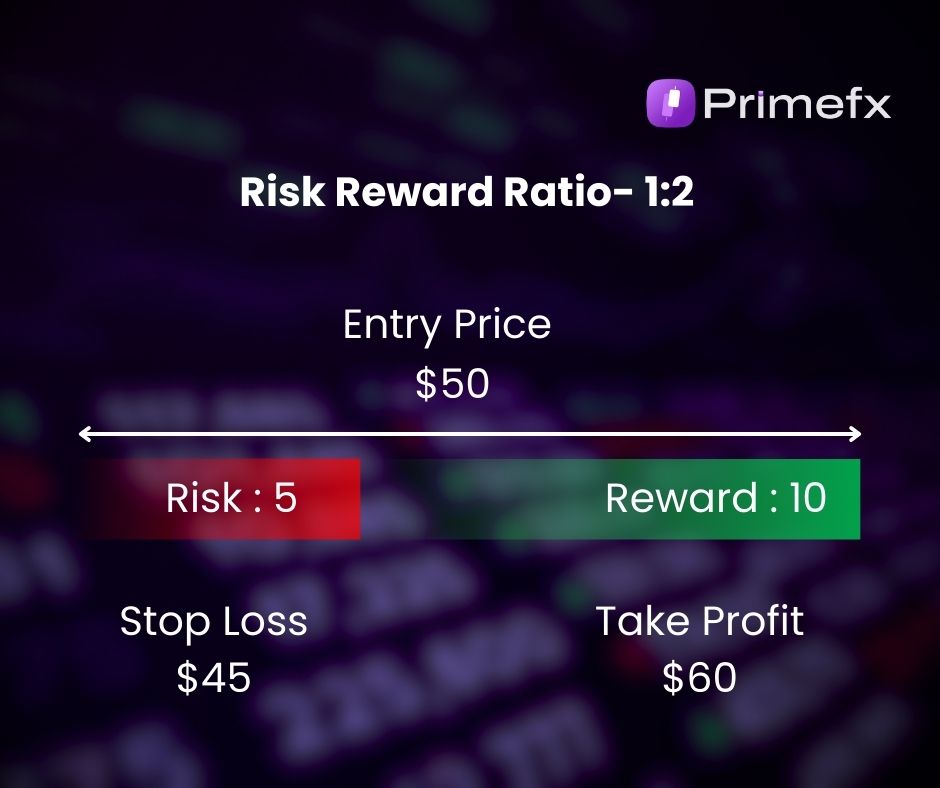
That’s the beauty of ratios. You don’t need to win every bet, just make sure the wins are bigger than the losses. It is about positioning the game so that wins outweigh losses.
The ratio of rewards to risks is important because it shows that profit is more important than perfection. You do not have to be right every time; you just have to have more wins than losses.
Traders apply the risk-to-reward ratio differently depending on their trading preferences. And, frankly, it is not that dissimilar to the decisions we make in our daily lives.
Scalpers: They are the fast movers. They move in and out of trades quickly, often making small profits at ratios near 1:1. It is like buying a coffee and hoping to get a free cookie with it. The motto is low risk, low reward.
However, profit will accumulate with frequent use.
Swing Traders: less urgent. They will not rush into the market and typically seek a 2:1 or 3:1 ratio.
Imagine it as watching a good TV series at night. You will lose your sleep, but it will be compensated for by the satisfaction of completing an exciting story.
Position Traders: They are the long-term planners. They hold trades for weeks or months, hoping to strike a 5:1 or even 10:1 ratio.
It is just as the case when going to the gym. You risk sore muscles today, but you will be rewarded by looking and feeling better at the big event later.
Whether you are fast like a scalper, wait like a swing trader, or plan long-term like a position trader, the reward-to-risk ratio is what keeps you profitable.
And, as in normal life, at a coffee shop, on Netflix, or at the gym, it is not that you must be right all the time. It is about ensuring that you win more than you lose.
The most difficult part of using the reward-to-risk ratio isn't the math. It is just the issue of controlling your emotions. The formula is known to many traders, but they fail to apply it when fear or greed sets in.
Fear of missing out causes them to throw themselves into something that is not part of the plan. Greed keeps them there too long, hoping for a better payoff.

Their risk aversion causes them to sell winners too soon and leave losers to run.
Impatience is yet another pitfall; some traders abandon a good 2:1 or 3:1 offer due to delays in execution. In fact, the risk-to-reward ratio is an examination of discipline. Sticking to it means trusting your plan and not letting emotions steer you off course.
Despite good intentions, traders often fall into traps that can destroy profits. Here are the big ones:
Chasing Unicorn Ratios
It is a fantasy to set unrealistic goals, such as aiming for a 20:1 ratio in a day trade. It is as though you were asking your cat to pay your taxes: it would be adorable, but would never come to pass.
Markets rarely move in a predictable manner, and chasing impractical ratios often leads to the loss of good, attainable trades.
Ignoring Stop-Losses
You have no stop-loss, and the risk-to-reward ratio is meaningless. A stop-loss is not merely an insurance policy; it is the barrier that keeps your account out of a nightmare once you make a single bad trade.
Over-Risking
Smart traders make small bets using only 1-2% of their account per trade. This way, they can survive losing streaks and remain in the game long enough to get the big payoffs.
This is how to have a profitable trading strategy that will not fly away:
It is always best to outline your stop-loss and then sleep on making money. Hedge the negatives; then the positives will take care of themselves.
Bet your trading profile. Do not employ unrealistic ratios. Set achievable goals aligned with your strategy.
Consistency matters more than perfection. A gradual 1:2 plan over time will be more effective than sudden fluctuations and unrealistic ambitions.
Keep in mind: Trading is more like a marathon than a sprint. Ratios help you maintain your pace so you do not burn out when following each market move.

The risk-to-reward ratio is not a figure but rather a sentiment. It is the distinction between being a serious trader and a chart player.
Master it, and you'll find yourself laughing at losses. Because you know the wins will more than make up for them.
Will you put the risk-to-reward ratio? The first step is to review your five most recent trades. Did your wins outnumber your losses? If not, it’s time to rethink your plan.
Smart risk management is the beginning of smart trading. At Primefx, we believe it begins with mastering your ratios.
Control your own trading today—define your ratios and stops, and trade with confidence.
1. Can you be profitable with a low win rate?
Yes. That’s the beauty of the risk-to-reward ratio. If you only make 3 trades in 10 and your winners are bigger than the losers, you can actually make money. For example, one can offset seven losses with three winning trades at a 3:1 ratio.
2. What’s the best risk-to-reward ratio for beginners?
Starting with 2:1 is the most successful transition for new traders. It is realistic and attainable and does not require an ideal win rate.
Beginners often struggle with discipline, and a 2:1 target makes the goals realistic. It also generates profits.
3. Is a 1:1 ratio ever profitable?
It might be, but only when your win rate is consistently above 50%. This implies that you must be correct more often than incorrect, which is difficult in unstable markets. A lot of them do not want 1:1 since there is not much space of error
4. Do professional traders use high ratios like 10:1?
Not usually. Institutions can trade with high volume and discipline, using unusual ratios such as 1.5:1 or 2:1. Smaller retail traders, in some cases, seek larger ratios (3:1 and above) to accelerate capital growth.
5. How do I set realistic ratios in live trading?
Base them on market volatility, your stop-loss distance, and your trading style. Test them in a demo account before risking real capital.

Sofia Alvarez is a professional market analyst and trading educator at PrimeFX Signal, with over 8 years of experience in Forex, Gold (XAUUSD), and major indices. She specializes in price-action and risk-managed swing trading, combining technical analysis, macro news, and strict risk controls to build clear, rules-based strategies for retail traders. At PrimeFX Signal, Sofia oversees trade ideas, reviews performance data, and writes in-depth guides on risk management, broker selection, and trading psychology so traders understand not just the signals but the logic behind every setup. Outside of market hours, she mentors developing traders through webinars and Q&A sessions, focusing on discipline, transparency, and sustainable long-term results in highly volatile markets.