The ambition of lucrative commerce is widespread. Open any social media page, and you will be greeted by inspirational slogans such as ‘I am a profitable trader’ wallpaper or a picture of a trader earning thousands within a few minutes.
Unsurprisingly, most people would like to get into day trading or forex trading.
However, most traders incur losses. Why? They rush into trades without a strategy, take risks lightly, and lack discipline.
Being profitable regularly is not about discovering a secret signal; it is about developing a solid foundation, understanding position sizes, and adhering to a known trading plan.
This manual will outline the specifics of becoming a profitable trader. Social media platforms, such as PrimeFx Signals, also provide information that simplifies complex trading concepts for beginners.
Most new entrants into the market do so with unrealistic expectations. They think that becoming rich quickly is a short way to go, that the more transactions that are carried out, the greater the earnings, or that there is some trade secret that is somewhere best buried.
These legends are supported by hype-based communities and influencers who highlight victories and rarely acknowledge defeats.
The reality is much harsher. Most traders lose money because they fail to manage risk and emotions. Profitable trading does not focus on jackpots but rather on accumulating small, regular returns.
A trader can still make it even when he or she has a 50 per cent hit rate, as long as the winners are bigger than the losses.
Strategy is not always as important as discipline. An average strategy with proper risk management would perform better than a brilliant strategy guided by emotion.
The strategic foundation of every successful trader rests on three pillars: strategy, risk management, and psychology.
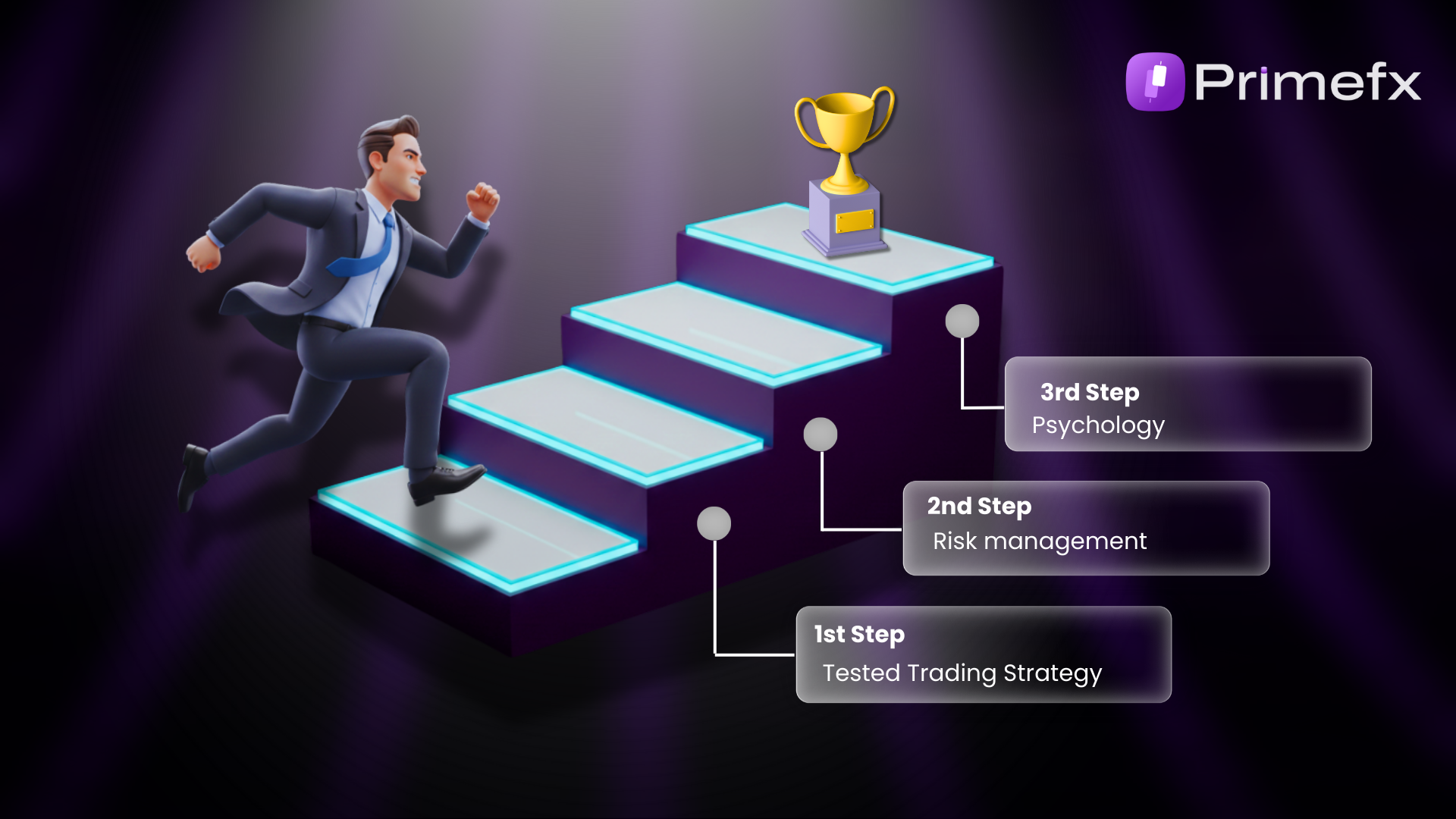
To begin with, you must have a tested trading strategy. It involves specifying explicit entry and exit criteria, testing them across hundreds of trades, and tailoring them to your target market.
Regardless of whether you are acquiring or selling stocks, forex, or futures, your superiority has to be demonstrated and not presumed.
Second, there is no bargaining on risk management. One of the principles is the 1-2 per cent rule: never risk more than 1-2 per cent of an account in a single trade—plan early exits for stop-losses and take-profits, and diversify instruments to reduce exposure.
Finally, it is all bound together by psychology. The silent murderers of trading success are fear, greed, and overconfidence. Essential habits include journaling trades, trading in simulators, and avoiding emotional attachment to money.
In the absence of these pillars, even the finest arrangements go down.
Profitable trading is anchored on a trading plan. Lack of it makes you a gambler in the financial markets, with the dice thrown away rather than with a deliberate strategy.
A plan helps turn a haphazard purchase or sale into a systematic, expert process that completes the decision-making. Consider it your own trading business plan; it outlines your goals, guidelines, and limits to help you avoid emotional errors and stay consistent.
Example: “A trading plan evolves with experience. Services such as PrimeFX provide tutorials and market analyses that help traders refine their strategies and remain consistent.
Most traders do not make good money, not because they lack a good trading strategy, but because they do not adhere to it.
A plan helps you set in advance what you want the market to open at, the kinds of setups you are seeking, how much you will risk, and when you will exit. It does not require speculation and minimizes the urge to trade.
To put it in a nutshell, it is the difference between making a profitable trade and gasping at emotional gambling.
You should ask yourself why you're selling. Is it to get financial freedom, to push your mind, or to make extra money?
Set SMART goals, which stand for Specific, Measurable, Achievable, Relevant, and Time-bound.
As an example, in 12 months, raise the value of your portfolio by 15%.
Figure out how much time you can really give.
Day trading requires hours of screen time every day, while swing or position trading requires checking once a week.
Follow the 1% or 2% rule: never risk more than a small part of your account on a single trade.
Position sizing lets you change the size of a trade based on how far away your stop-loss is. This makes it possible for winners to grow while keeping losses in check.
Make it clear what needs to happen before you can make a trade.
For example, place your stop-loss below support and buy when the price breaks above resistance, with volume confirming the move.
Set your stop-loss and take-profit levels before you start trading.
This keeps you from letting losers run or cutting winners too soon.
Set your stop-loss and take-profit levels before you start trading.
This keeps you from letting losers run or cutting winners too soon.
The Big Picture
A trading plan is not static. It develops with experience, adaptation to market conditions, and a sharpened edge. Profitable merchants view their plan as a living document, constantly revised but never disregarded.
To succeed in trading, you need a sufficiently detailed plan to guide your decisions, but not one so rigid that it keeps you in the same spot.
Strategy takes centre stage in trading; however, to remain competitive, risk management is paramount. What is pure and simple is this: all the traders will make losses; only those who can control them will live long enough to see the profits multiply.
One careless move can cancel months of progress without strict regulations.
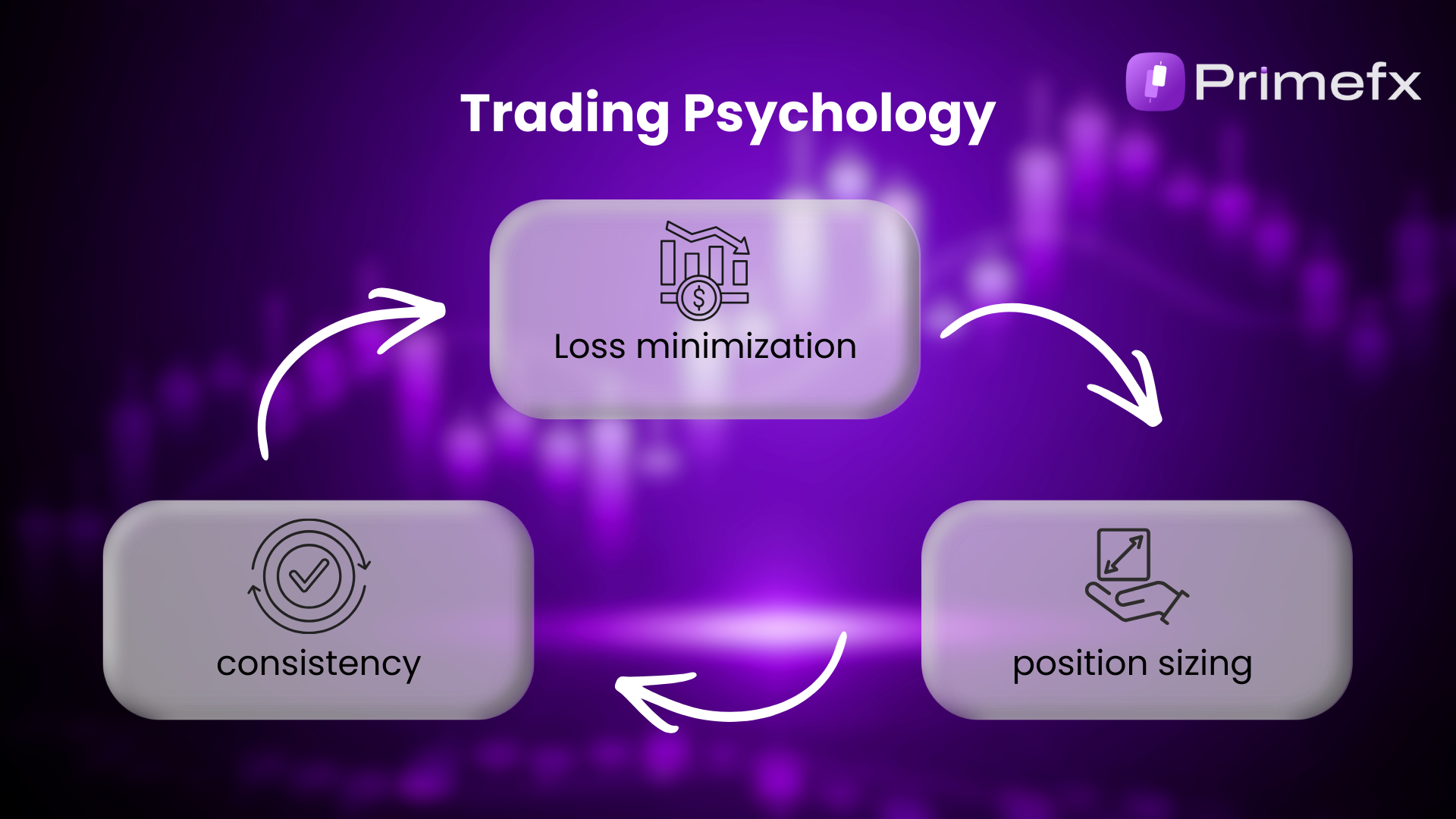
The golden rule is to minimise losses. The policy of most winning traders is based on the 1 per cent or 2 per cent rule: never put more than a small percentage of your account on a single trade. This promotes discipline and helps you avoid wasting your capital in a single mistake.
Position sizing is also crucial: align your stop-loss distance with the size of the trade. When properly executed, this is a reasonable risk-reward balance; hence, winners and losers.
Risk management also entails knowing when to step aside. Limiting the number of losses per day or week helps traders avoid emotional revenge trading, whereas trading across multiple markets helps avoid being caught by unexpected shocks.
Most importantly, it is a matter of consistency. It is not about avoiding losses, but about ensuring they are limited, predictable, and never devastating, which enables profitable trading.
PrimeFX also regularly issues guides on position sizing and stop-loss discipline to help traders preserve their capital.
Proven Trading Strategies That Deliver Results
Have kryptonite days when market conditions consistently work against your setup.
Think long-term—live to see years, not days.
Begin with micro risks (0.1-0.3% per trade), then increase to larger risks.
Know the distinction between prop firm guardrails and self-imposed retail trader discipline.
The trading world has many strategies, and only a handful have consistently delivered results when coupled with discipline.
One of the easiest and most effective ones is trend following. By riding momentum, buying up, and shorting down, traders are getting themselves on the same side of the market. The strategy is most effective in markets with strong trends, where price movements are evident.
Scalping is about making quick sales by taking advantage of small price changes. It requires accuracy, speed, and capital, but it can be very profitable if done right, using strict stop-losses and small positions.
When signs of a turnaround appear, contrarian plays involve betting against trades that are already fully committed. They are risky, but if you time them right, they can pay off big.
In the same way, trading the news can make you money by responding to economic data, salary reports, or events in other countries. But you need to be careful with this approach, as volatility can quickly work against you.
One professional insight often overlooked is the use of a tight stop-loss strategy. Small stop-losses (1.5-2 per cent) allow traders to increase publicity to position size and achieve disproportionate profits even with low win rates.
Day trading deals with the intraday price fluctuations, which aim at closing all positions before the day is over. It is also dependent on volatility and liquidity but demands rapid actions, close stop-losses, and a well-defined strategy to prevent overtrading.
This will enable profits to grow more quickly with minimal losses. It is not about pursuing every setup, but rather about specialisation.
According to the advice of numerous professionals, it is essential to rely on one or two strategies, become accustomed to them, and diversify only then.
Mastering Trading Psychology and Discipline
Emotional control is not sufficient, even with the best trading strategy. The difference between successful and burned-out traders is usually psychological.

Fear causes traders to avoid good setups, and greed causes them to oversize positions or disregard stop losses. Post-winning-streak overconfidence leads to careless risk-taking, and the vengeance trading that follows a losing streak can ruin an account in the shortest possible time.
Developing discipline needs instruments and practices. Journaling trades helps identify repetitive errors. Training in simulators creates confidence before putting money at risk.
Emotional dissociation with money, turning capital into numbers as opposed to feelings, lessens prejudice. The use of automated instruments, such as bracket orders, which specify entry and stop-loss/stop-profit levels, eliminates emotional bias in decision-making.
Choose brokers with low fees and faster execution.
Use scanners and Level 2 quotes to identify opportunities.
Automate discipline with bracket orders.
Create a distraction-free workspace.
Common Mistakes That Kill Profitable Trading
Accounts are swept away by overtrading and pursuing losses.
Disregard of stop losses makes manageable risks catastrophes.
Biases stemming from emotional attachment to money lead to erroneous decisions.
Mimicking others' trades without taking any steps to protect yourself is risky.
Overusing leverage—trading on borrowed money that you are not comfortable taking risks on—can destroy accounts more than any other error.
To go into more detail on safe leverage practices straight away, PrimeFx Signals has an internal trading manual that provides a step-by-step account of position sizing, stop-loss discipline, and leverage management.
By having access to this resource, you can be sure you are using leverage as an instrument of growth, not a means to destroy.
PrimeFX helps traders make sophisticated ideas easier to understand and provides client-friendly insights, including educational blogs, risk management manuals, and strategy dissections. For newcomers, this translates into less confusion and greater confidence; for seasoned traders, it provides more cutting tools to hone their advantage.
Final Thoughts
Trading is often portrayed as a quick way to get rich, but the truth is that successful trading is a disciplined process that requires time and organization. To become a profitable forex trader, first, you need to ignore the myths.
Next, establish some reasonable grounds, learn a few successful traders' tricks, and use risk management rules to ensure that every time you buy or sell, you are doing it.
The traders who survive are those who are not chasing jackpots but instead safeguard their capital, refine their trading strategies, and remain stable even when emotions run high.
It is equally essential to avoid common errors, such as overtrading, disregarding stop-loss orders, or blindly following others, as much as it is to identify winning setups.
You don't need luck to be successful in investing; you just need to treat it like a business. Protect your money, plan your deal, and then trade your plan. You can do well in the stock market if you are disciplined and have the right tools.
To be successful at investing, you need to think of it like a business. Traders can access the information, tools, and training they need on platforms like PrimeFx Signals to plan their trades, manage risk, and succeed in the financial markets.

Sofia Alvarez is a professional market analyst and trading educator at PrimeFX Signal, with over 8 years of experience in Forex, Gold (XAUUSD), and major indices. She specializes in price-action and risk-managed swing trading, combining technical analysis, macro news, and strict risk controls to build clear, rules-based strategies for retail traders. At PrimeFX Signal, Sofia oversees trade ideas, reviews performance data, and writes in-depth guides on risk management, broker selection, and trading psychology so traders understand not just the signals but the logic behind every setup. Outside of market hours, she mentors developing traders through webinars and Q&A sessions, focusing on discipline, transparency, and sustainable long-term results in highly volatile markets.