Many people call leverage the "power tool" of investing in the stock market. It gives you power over positions that are much bigger than the money you put in at the beginning. This can open up doors for you that you wouldn't have had access to otherwise. But, like any strong tool, how you use it can make or break things.
At PrimeFX, leverage is more than just a number. It's like a double-edged sword or a magnifying glass—both earnings and risks grow larger. This blog simplifies leverage, contrasts its explanations with those of leading brokers, and demonstrates how leverage affects your account balance and overall financial planning.
Leverage is borrowing money to increase your exposure in the forex market or other financial products. You don't have to put down the full value of a trade all at once. Instead, you put down a smaller amount, called a starting margin, and your broker loans you the rest through your margin account. This lets you open trades that are worth a lot more than the money you put in.
For example, you can manage a $1,000 position with a leverage ratio of 10:1 using a margin of $100. Think of leverage as a way of "borrowing strength.” It exaggerates both positive and negative market moves. When the market is going your way, your profits are multiplied; when it goes against you, your losses are multiplied.
This is why leverage is called a double-edged sword. It may help fast‑track growth, but it can also cause significant losses if used recklessly.
To fully understand leverage, it helps to picture how margin and exposure interact in foreign exchange trading. Suppose you want to trade EUR/USD (one of the most liquid currency pairs):
With no leverage, a $1,000 deposit buys you $1,000 worth of currency.
With 10:1 leverage, you only need a $100 margin to control that same $1,000 position.
With 50:1 leverage, a $20 margin provides the same exposure.
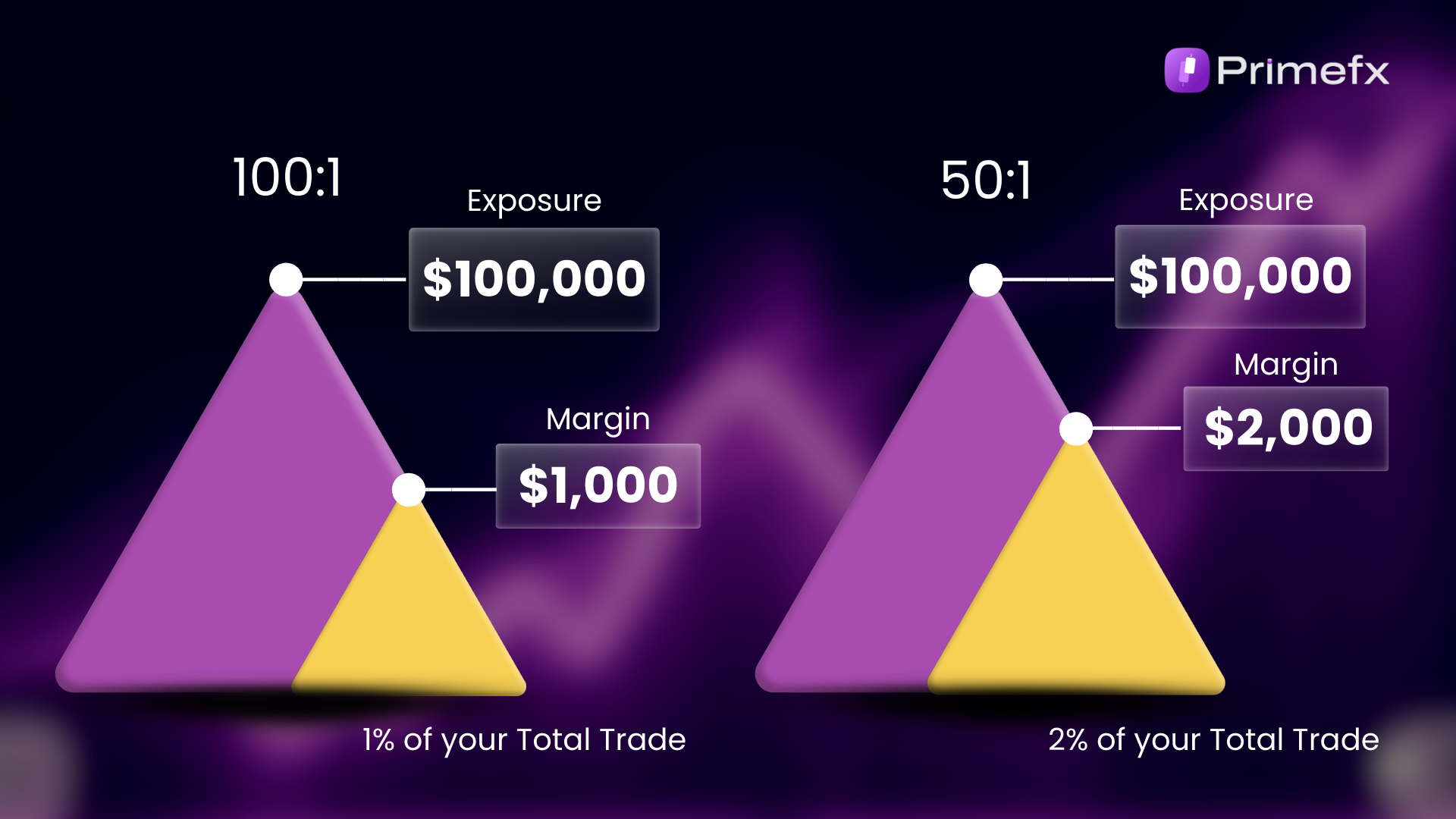
Profits and losses are based on the entire position, not just the margin deposited. A 1% price move translates to $10 in profit or loss on a $1,000 exposure. At 10:1 leverage, that $10 change equals 10% of your margin. At 50:1 leverage, the same price move wipes out half your margin.
This is why leverage is powerful: it amplifies even small market movements. It is also why retail traders and clients must use risk management tools such as stop-loss orders, position sizing, and negative balance protection to avoid devastating losses.
People often use the terms "leverage" and "margin" to mean the same thing, but they mean different things in trading:
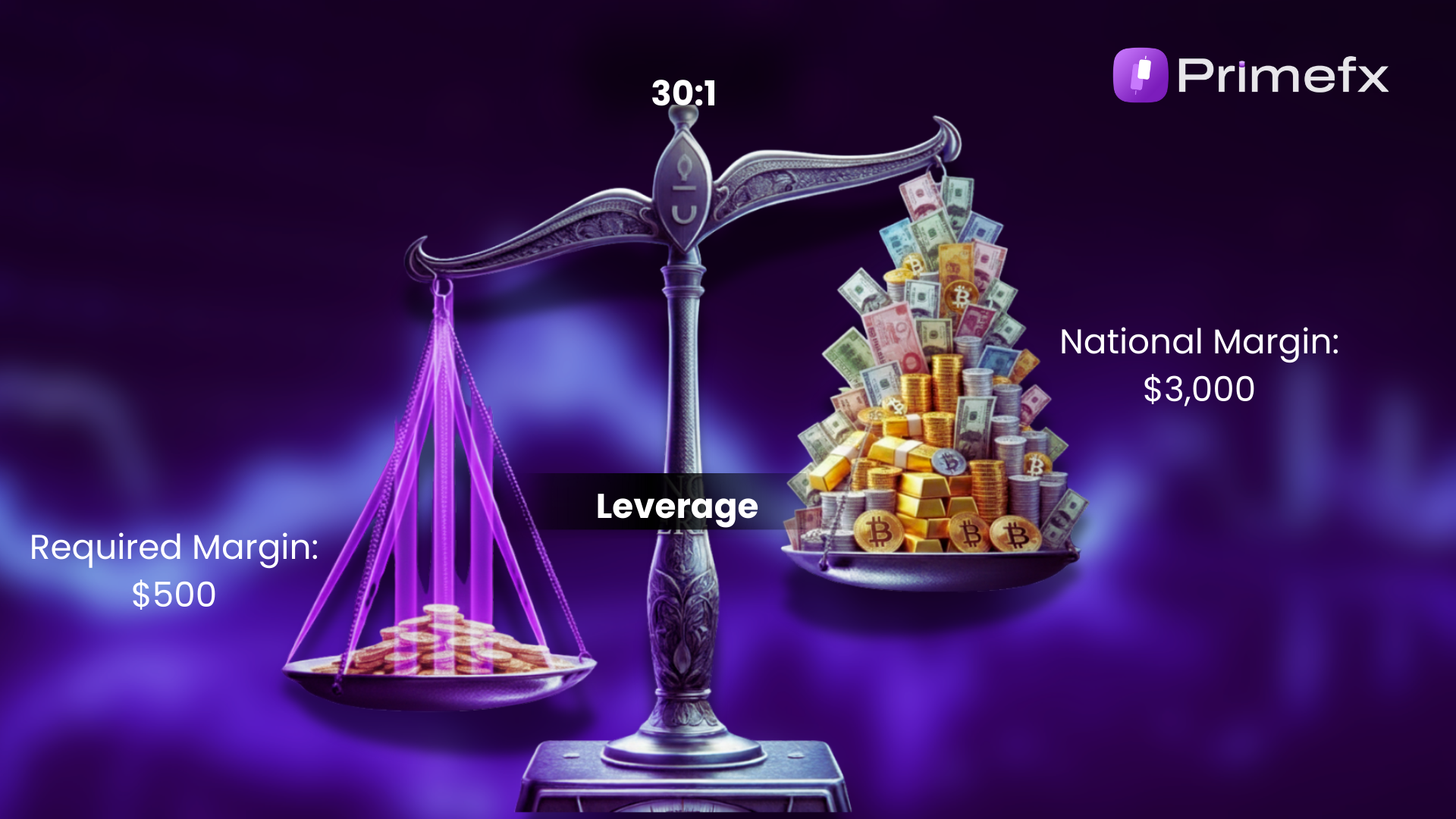
The ratio of how much more risk you are taking relative to your deposit is called leverage. For instance, 20:1 leverage means that you can control $20 worth of capital in the stock market with every dollar you put in.
The amount of money you put down to protect a leveraged position is called the margin. It is security that backs up the broker's loan.
Put simply:
Margin is your deposit (minimum margin)
Leverage is the multiplier that expands your deposit into a larger trading position.
Example: Opening a 20:1 leverage trade worth $10,000 requires an initial margin of $500. The leverage ratio shows your exposure relative to your deposit, while margin is the actual cash pledged.
Example: When you desire to open a 20:1 leverage trade with 10,000 dollars in value, then the margin requirement is 500 dollars. Leverage ratio informs you of the proportionality of your exposure relative to your deposit, whereas the margin is the actual amount of money you are supposed to pledge.
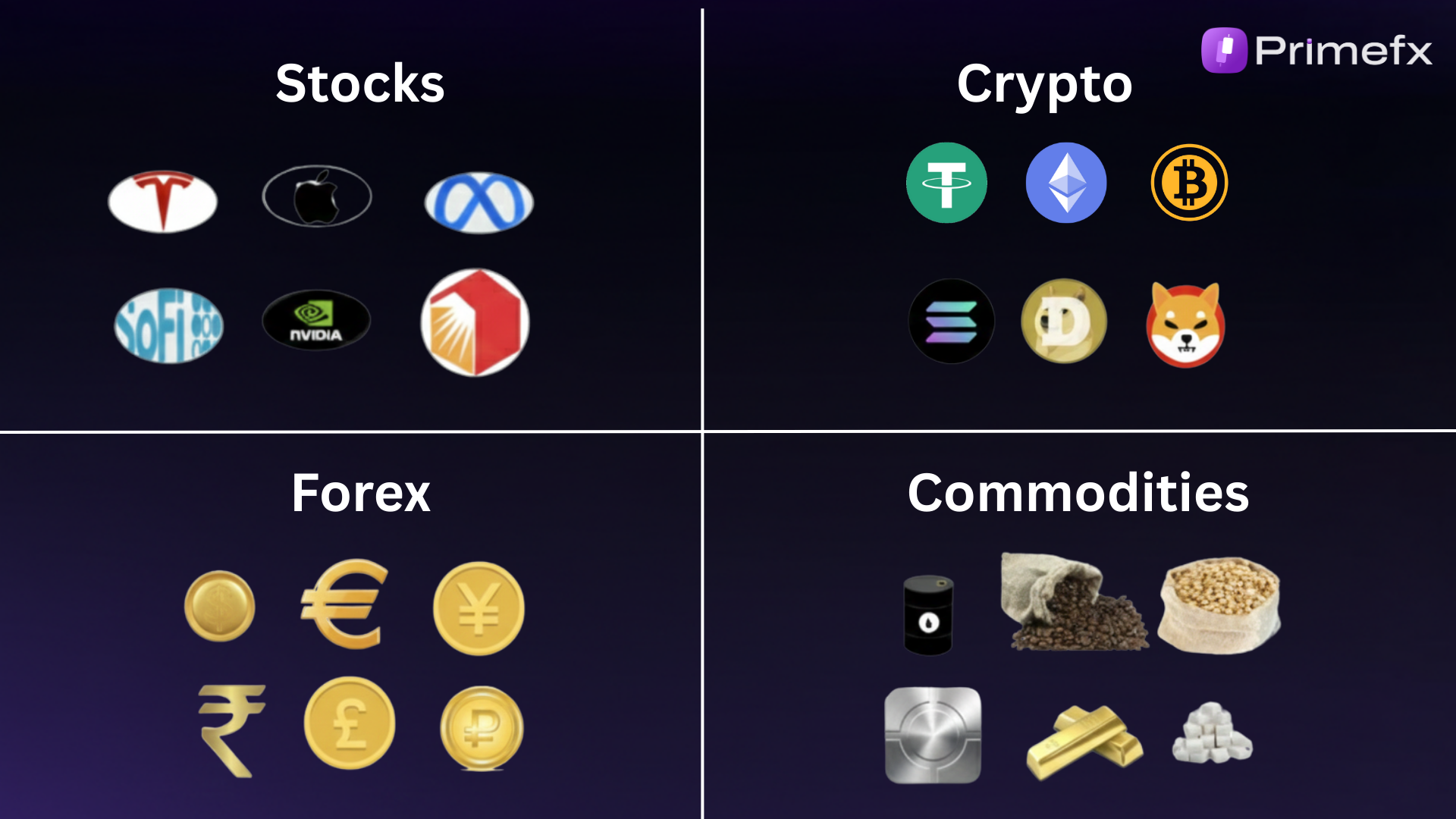
There is substantial capital available for forex trading, prices don't change much from day to day, and leverage is often very high.
You can trade CFDs on shares, indices, commodities, and exchange-traded funds (ETFs) without actually owning the commodity.
Cryptocurrencies: Very volatile markets that are often paired with dealing with a lot of borrowed money. (e.g., What is leverage when buying crypto?
There are futures contracts for oil, gold, and natural gas.
PrimeFX tip: Before entering crypto, leverage trading for beginners should start with forex or indices, which offer more predictable liquidity.
· Even a small price move can yield considerable returns. Example: A 10:1 leverage on a $100 margin creates $1,000 exposure.
· Example: A 10:1 leverage on a 100 margin will give the impression of making 1000 dollars.
· You do not have to tie the money to a single trade.
· Margin releases funds to other sources of opportunities, hedges, or just cash in hand.
· Leverage allows traders to buy or sell assets, profiting in both bullish and bearish conditions.
· This flexibility implies that you can buy and even sell when there are bullish or bearish conditions.
Leverage allows you to invest your limited capital across different financial instruments.
Diversification disperses the risk and builds up a more balanced portfolio.
· In PrimeFX, leverage is a strategy of strategic development.
· It is not about the quick wins but about making the most out of efficiency and opportunity, disciplinarily.
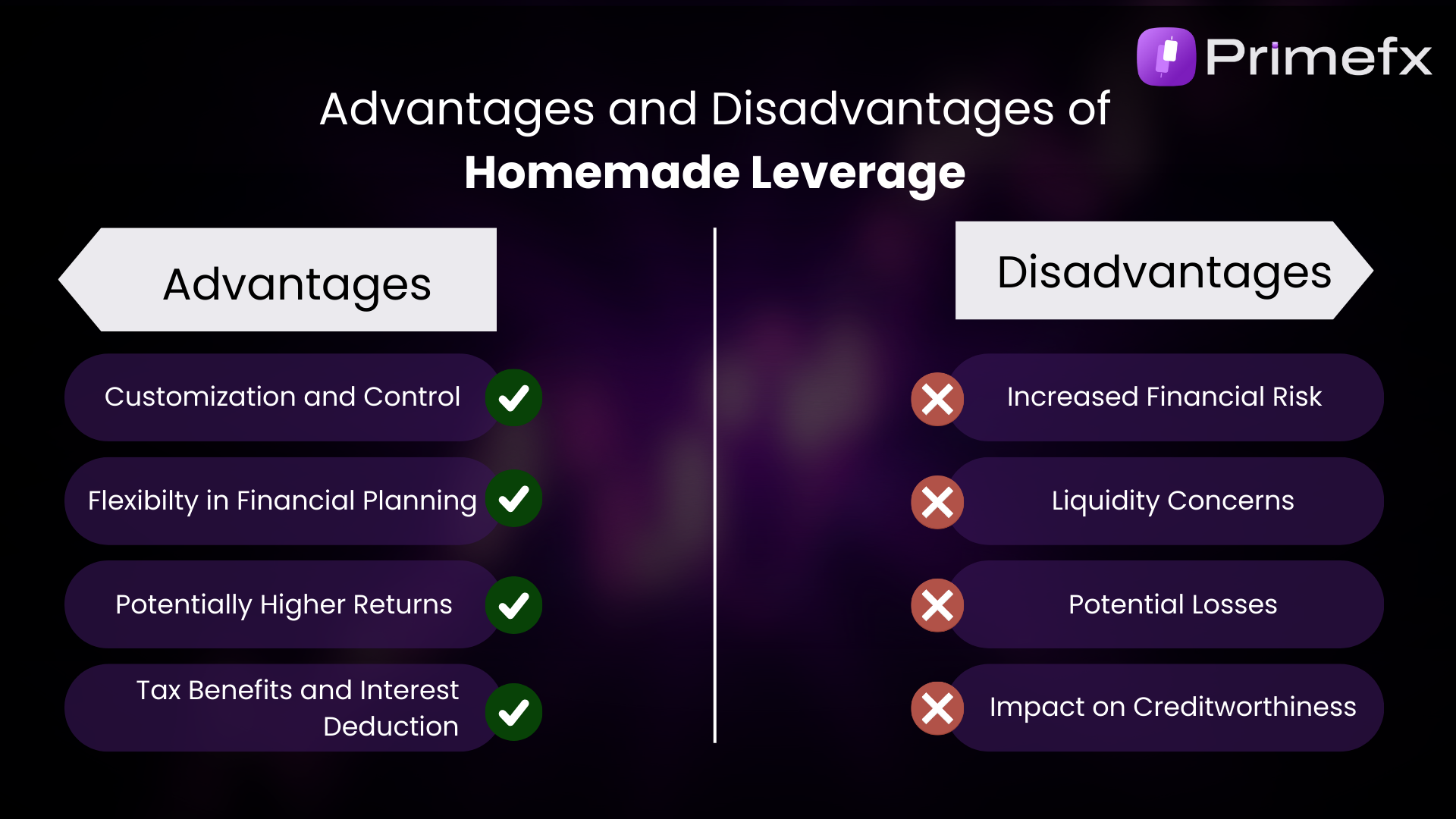
Magnified Losses: Leverage magnifies the size of the profit and loss; that is, small market moves will erode your margin faster than otherwise.
Margin Calls: In case your account balance is less than the margin requirements, your broker will require you to deposit more money to keep positions open.
Forced Liquidation: In case margin calls are not met, brokers are allowed to close your open positions without any announcement, usually at an unfavorable price.
Funding Costs: Loans held as leveraged overnight positions typically incur interest or other fees, which can erode profits over the long term.
PrimeFX Warning: Misusing leverage can drain your account faster than it grows. Always consider risk tolerance and understand the risks involved.
Stop-Loss Orders: Automatically close losing trades.
Guaranteed Stops: Ensure exits occur at exact levels (at a premium cost).
Negative Balance Protection: Prevents accounts from falling below zero.
EPR vs PNR (Schwab’s metrics):
Expected Price Range (EPR): Largest expected daily price move.
Point of No Return (PNR): The motion that eliminates equity.
Always aim for EPR > PNR.
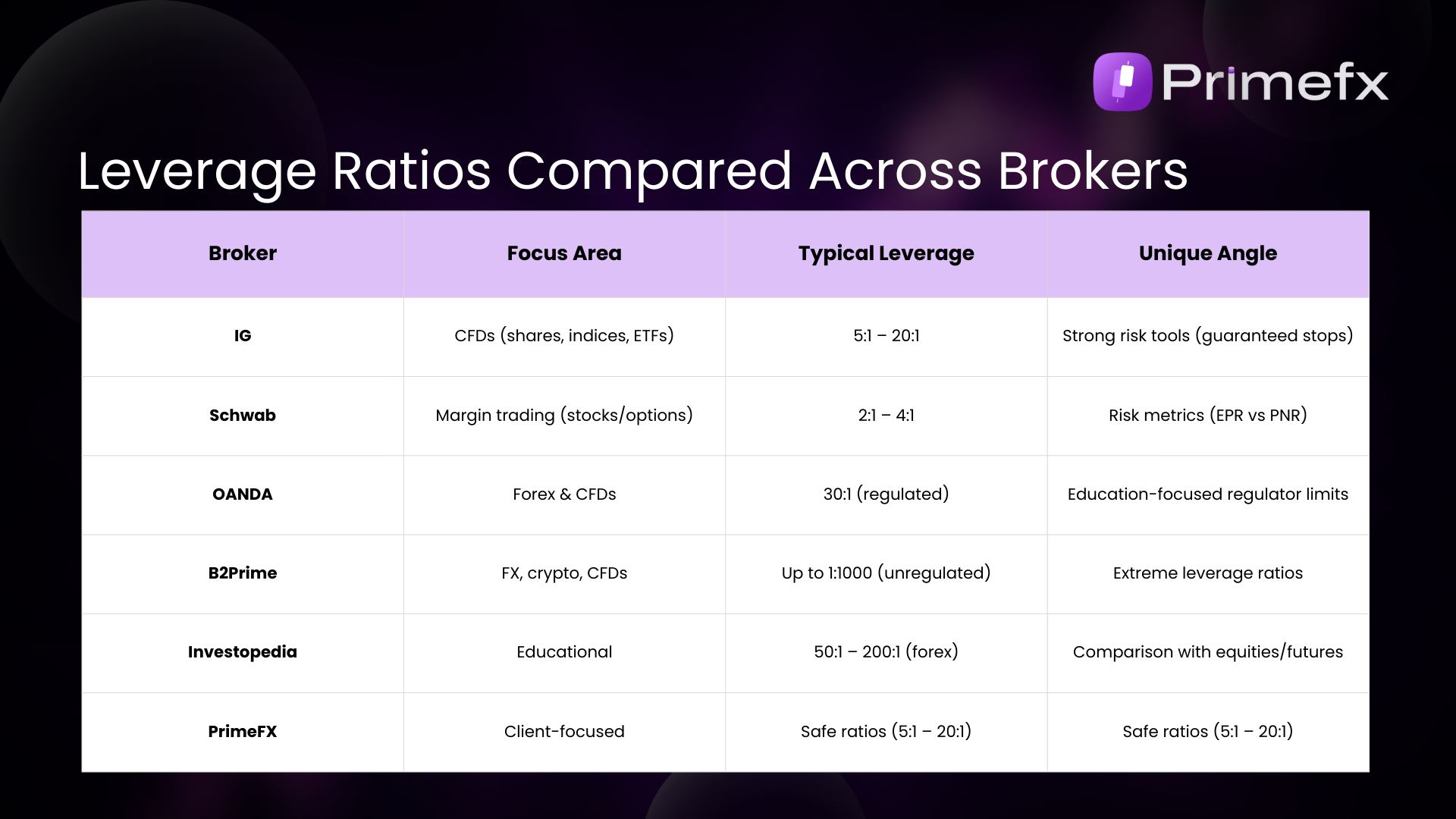
Broker | Focus Area | Typical Leverage | Unique Angle |
IG | CFDs (shares, indices, ETFs) | 5:1 – 20:1 | Strong risk tools (guaranteed stops) |
Schwab | Margin trading (stocks/options) | 2:1 – 4:1 | Risk metrics (EPR vs PNR) |
OANDA | Forex & CFDs | 30:1 (regulated) | Education-focused regulator limits |
B2Prime | FX, crypto, CFDs | Up to 1:1000 (unregulated) | Extreme leverage ratios |
Investopedia | Educational | 50:1 – 200:1 (forex) | Comparison with equities/futures |
PrimeFX | Client-focused | Safe ratios (5:1 – 20:1) | Simplified education & SEO-driven FAQs |
· Do not take a chance of trading more than 1-2 percent of your account balance.
· Use stop-loss orders consistently.
· Start with low leverage (5:1 or 10:1) using a demo account.
· Diversify currency pairs across markets.
· Leverage is borrowed power and not free money.
At PrimeFX, we make complex concepts such as forex leverage and margin rules easy to understand so that small traders can use them. If a client wants to understand trading methods and the risks that come with them, we use analogies and frequently asked questions (FAQs) to make it easy for them.
Leverage is a two-sided sword. It can generate profits faster, but it can also destroy accounts when misused. It is all about discipline: learn your ratios, obey rules, and use risk management tools.
Take the more innovative approach to trading with PrimeFX. Keep in mind, leverage is not only going to impact your account balance; leverage is going to shape your trading path in financial markets.

Sofia Alvarez is a professional market analyst and trading educator at PrimeFX Signal, with over 8 years of experience in Forex, Gold (XAUUSD), and major indices. She specializes in price-action and risk-managed swing trading, combining technical analysis, macro news, and strict risk controls to build clear, rules-based strategies for retail traders. At PrimeFX Signal, Sofia oversees trade ideas, reviews performance data, and writes in-depth guides on risk management, broker selection, and trading psychology so traders understand not just the signals but the logic behind every setup. Outside of market hours, she mentors developing traders through webinars and Q&A sessions, focusing on discipline, transparency, and sustainable long-term results in highly volatile markets.