Since the time of the goats swapped with grain for spices that travelled across continents, commodities have always been the bloodline of trade. They drove empires, nourished populations and constructed cities.
In 1848, the Board of Trade brought this ancient practice into the modern era in Chicago with futures contracts that became a safety net for both farmers and merchants.
Commodities trading is no longer done on dusty markets. Algorithms, blockchain and digital platforms have transformed barrels of oil and sacks of wheat into strategic assets - indicators of inflation, geopolitical tensions, and investment opportunities.
Primefx comes in at this point. Primefx interprets the theatre of commodities by making it simple and interesting tales instead of letting the traders get lost in jargon.
Nobody wants to just trade; they want to know why oil prices shoot up when there is a geopolitical crisis, and how coffee futures depend on the weather in Brazil, and so on and so on.
Primefx is ensuring that its clients know.
The common goods of the world are commodities: oil, gold, wheat, and coffee. Regardless of the place of origin, they are interchangeable. A barrel of oil is a barrel of oil; one bushel of wheat is a bushel of wheat.
But they are uneasy with their prices. They can be flying or plummeting due to a drought, a war or a new invention. That is why commodities are not only the daily needs but also strong financial tools.
Hard Commodities: You dig them up from the ground. They are oil, copper, gold, and natural gas. They have volatile prices that are dependent on geopolitics, strikes, and technological changes.
When the war in Russia and Ukraine shook supply chains, oil prices rose above $100/barrel.
Soft Commodities: Grown in the fields- coffee, cotton, sugar, wheat. They are limited to weather, harvests and pests.
In 2021, the drought that struck Brazil made the coffee beans overnight into luxury items.
In short, politics and extraction define the hard commodities, climate and biology the soft ones.
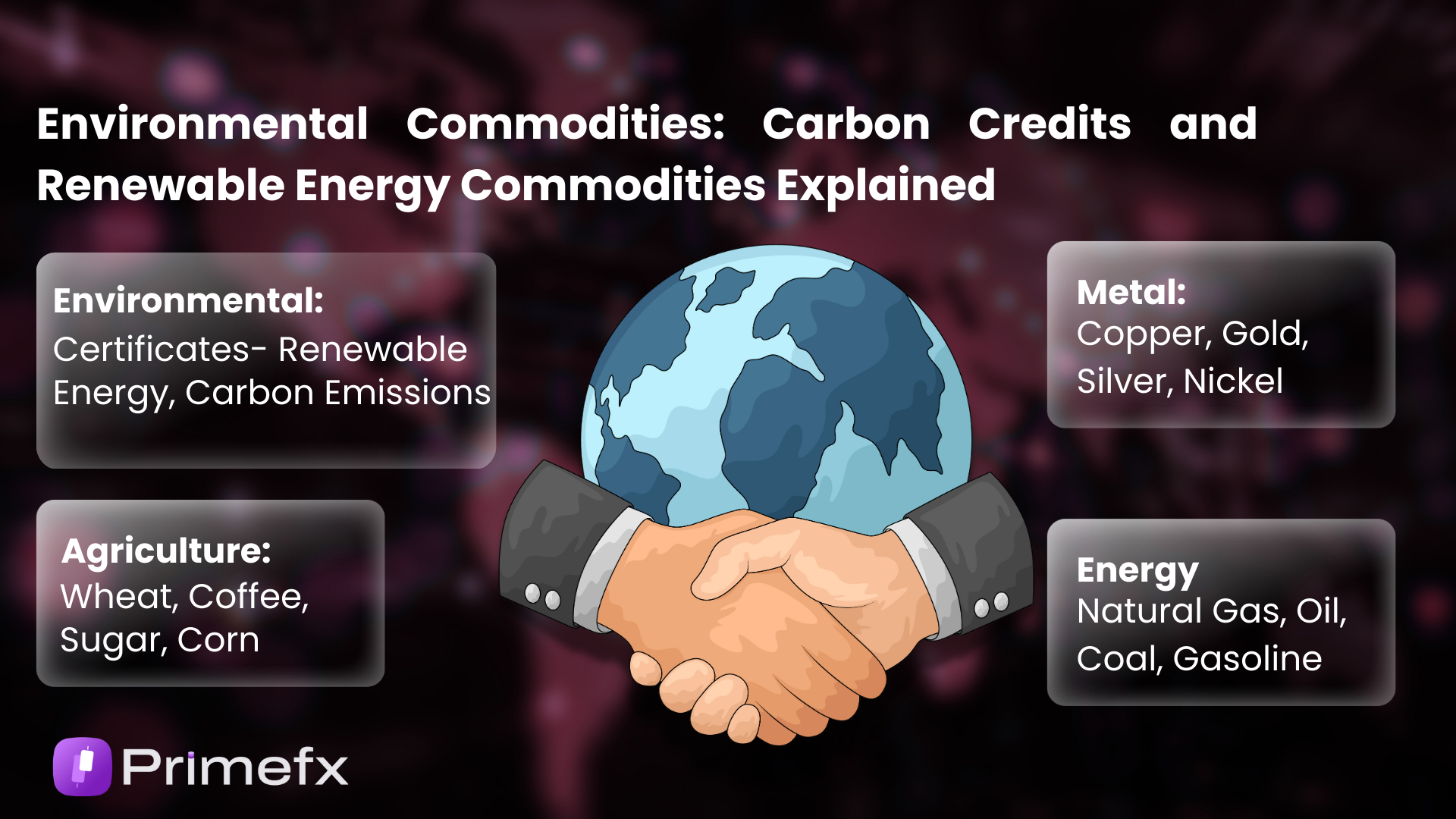
Primefx further takes these differences out of context and puts them into real-life language. The geopolitics of energy and metals (hard commodities) and the climate stories of food and fabric (soft commodities) are the hard and soft commodities respectively. Clients are taught to perceive not only numbers, but stories.
Carbon Credits: This enables companies to offset their emissions by purchasing permits to emit within specified limits.
Renewable Energy Certificates (RECs): These are documents that attest to the generation of electricity from renewable resources.
Motivations: ESG requirements, governmental policies, and socially responsible investment.
Scenario: Airline companies such as Delta and United are purchasing carbon offsets to achieve sustainability.
This market is expanding rapidly, and carbon trading will exceed 100 billion per year over the next ten years.
Bandwidth, cloud storage, and data are units of measurement and exchange in the digital economy.
Drivers: Data needs Cloud computing and streaming services.
Example: Amazon Web Services is a company that offers cloud storage space as a commodity at a fee.
Digital commodities broaden the category of tradable assets by shifting the balance toward information-based assets and away from physical goods.
Producers: Hedging helps producers such as farmers, miners, and oil drillers secure prices against declining market prices.
Consumers: Airline companies, food companies, and manufacturers achieve stable input costs.
Speculators: Retail traders, institutional investors, and hedge funds profit from price fluctuations.
Regulators & Exchanges: CME, ICE, and LME create transparency, liquidity, and fairness.
Example: A farmer may sell wheat futures to protect against falling prices, while Kellogg’s buys futures to lock in stable costs for cereal production.
Whether it is the CME of Chicago to the LME of London, the NYMEX of New York to the oil hub of Singapore, commodities are exchanged and moved through exchanges and shipping channels. Trading screens are as significant as ports like Rotterdam and straits like Hormuz.
Gold has never been deprived of emotional value in the financial markets. Gold is a preferred asset when uncertainty prevails, such as during war, recession, or inflationary shocks, because it is a stable store of value. Gold is considered non-perishable and universally acceptable, unlike paper money, which can lose value. Thousands of years of history support this safe-haven position: ancient societies stored their wealth in gold coins, and, today, central banks hold gold reserves. Once people begin to fear, gold prices tend to rise, driven by collective psychology rather than by supply and demand.
Markets cannot be treated as rational. Crowd sentiment often guides traders, particularly in volatile markets such as oil and agriculture. When headlines convey the impression that oil is scarce, most traders tend to purchase the commodity, thereby intensifying price spikes. Equally, agricultural futures experience abrupt rises when crop reports indicate poor harvest prospects, as traders herd. It can lead to bubbles or crashes and can demonstrate how the human psychology of fear of missing out or panic selling can determine commodity markets as much as fundamentals can.
Commodities are not merely financial resources; they also have cultural and historical meanings. Coffee has been associated with social practices across continents, cocoa with colonial eras and contemporary fair-trade campaigns, and cotton with the economic backbone of the Industrial Revolution and contemporary cotton-fabrication sectors. Such cultural narratives affect demand and ethical considerations. For example, consumers are increasingly demanding fair-trade coffee and sustainably sourced cocoa, combining cultural heritage with modern ESG values.
Farming is being altered by artificial intelligence. Crop yields can be predicted with greater accuracy using predictive weather models and satellite imagery. These insights are used by farmers and traders to predict future shortages or surpluses, thereby affecting futures prices. For example, AI-based drought forecasting in Brazil can provide commodity traders with months of advance warning of a coffee shortage, enabling them to hedge earlier.
Goods must pass through international supply chains, and logistics costs are passed on to consumers. Delays in shipping, port congestion, and freight rate increases can increase commodity costs. For example, the Suez Canal queue and high container prices during the pandemic increased global oil and grain prices. It is a secret of logistics: prices can change at any moment.
Electric vehicle (EV) batteries and smartphones are important to lithium and cobalt. These minerals have become battlegrounds in geopolitics as countries compete to secure clean energy and technology. China has a significant stake in the cobalt supply chain, whereas lithium is sourced from South America. This rivalry leads to volatility, as demand increases with rising EV adoption and political tensions intensify in supply chains.
The demand for commodities is being transformed by ethical sourcing and sustainability. There is growing pressure on investors and consumers to purchase products that meet environmental, social, and governance (ESG) standards. As an illustration, firms that are able to acquire cobalt (conflict-free) or fair-trade cocoa receive reputational benefits. ESG pressures can displace demand toward less productive producers and affect global prices and trade patterns.
When times are bad, commodities tend to perform well because they are difficult to value. When stock markets collapse, investors shift to lower-risk assets, such as oil, gold, or agricultural products. Notably, gold prices rose during the 2008 financial crisis and the COVID-19 pandemic.
Traditional inflation hedges are gold and oil. These commodities retain or increase their value as the currency loses purchasing power. They are used by investors to hedge against inflation. For example, during periods of inflation, oil prices tend to rise due to higher production and transport costs.
Bitcoin and other digital assets are often characterized as commodities used as hedges against inflation. Nevertheless, compared with gold or oil, cryptocurrency lacks centuries of historical confidence and physical use. Although cryptocurrency is decentralized and innovative, commodities have a foundation in tangible demand: energy, food, and metals that economies cannot do without.
Agriculture is being transformed using IoT sensors, drones, and AI-oriented analytics. Farmers can assess soil health and yields and optimize irrigation. These technologies make agricultural commodities more predictable and sustainable by making processes more efficient and less uncertain.
Both customers and shareholders are turning to ethically sourced commodities. Green investment increases demand for commodities such as fair-trade coffee, conflict-free timber, and sustainably harvested timber. Ethical commodities are sold at high prices, redefining supply chains.
Exploration of space may reconsider the supply of metals. Businesses are exploring asteroid mining as a source of rare and precious metals, such as platinum and cobalt. Although this trend remains futuristic, it may significantly increase supply and eliminate dependence on Earth-based mining, thereby altering long-term commodity markets.
Information is becoming a commodity to be traded. Consumer behavior data, logistics data, and even weather data are traded. Data in a digital economy is like oil—it drives industries and determines competitive advantage.
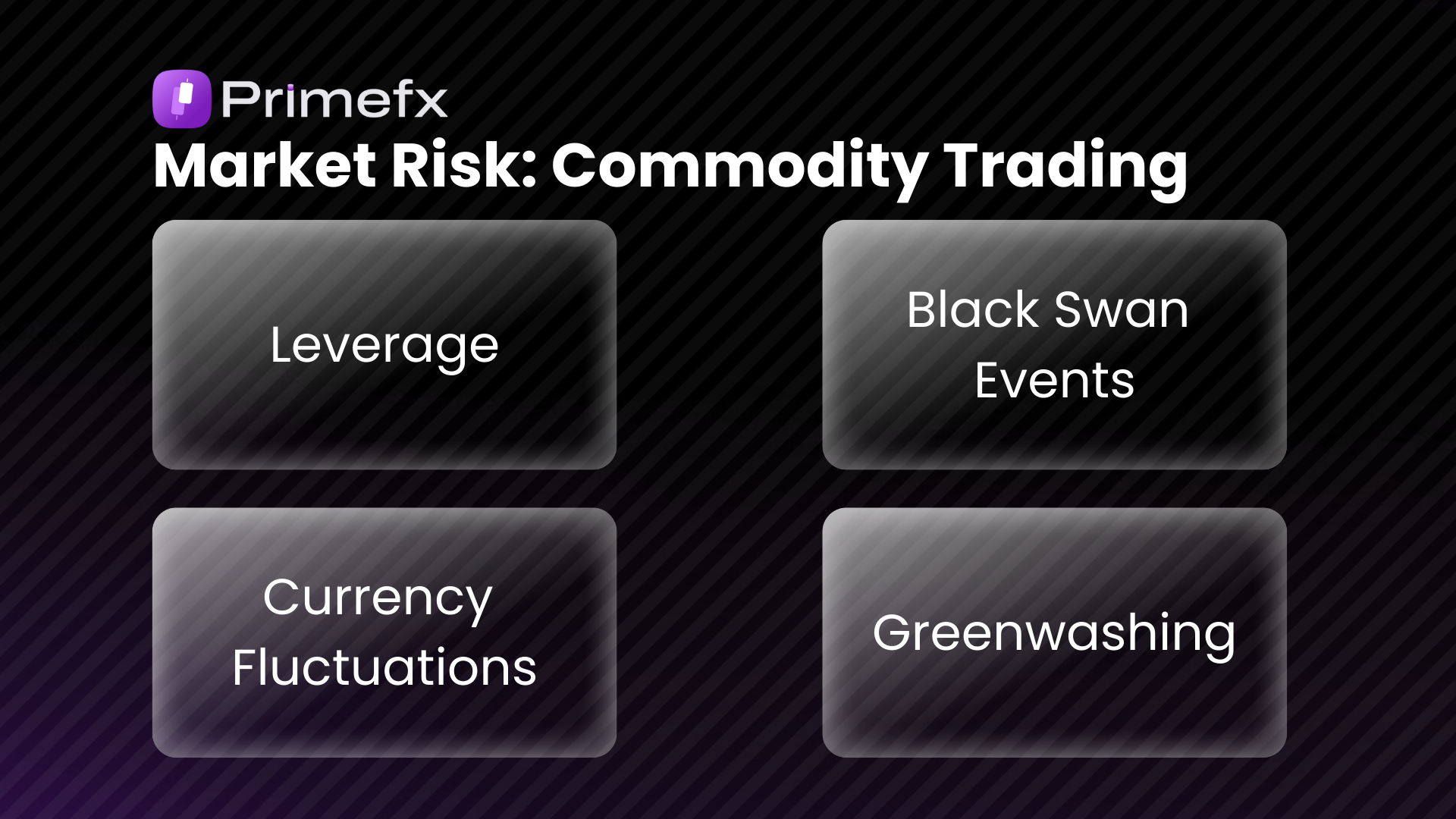
Leverage: Allows traders to control large positions with small capital, amplifying both gains and losses.
Black Swan Events: Unpredictable shocks like pandemics, wars, or natural disasters disrupt markets.
Currency Fluctuations: Because most commodities are priced in USD, changes in the dollar's exchange rate affect global prices.
Greenwashing: Misleading ESG claims can distort investor confidence and create false signals of demand.
Demo Accounts: Practice trading without financial risk to build confidence.
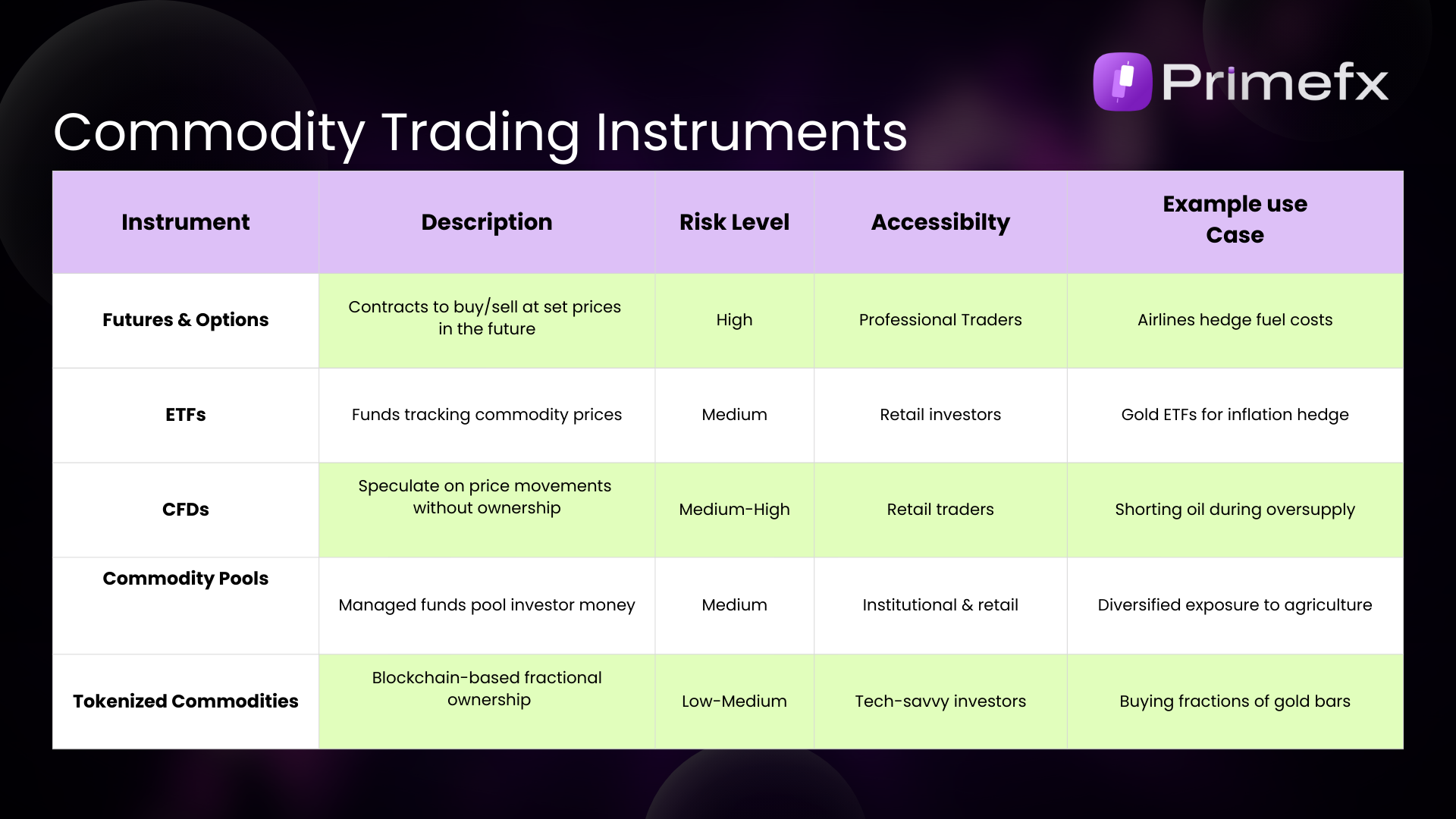
ETFs vs. Futures: ETFs are safer and easier for beginners, while futures require higher risk tolerance and expertise.
Diversified Portfolios: Spread exposure across energy, metals, and agriculture to reduce risk.
Narrative Trading: Use storytelling and sentiment analysis to anticipate market moves (e.g., “oil prices rise during geopolitical tensions”).
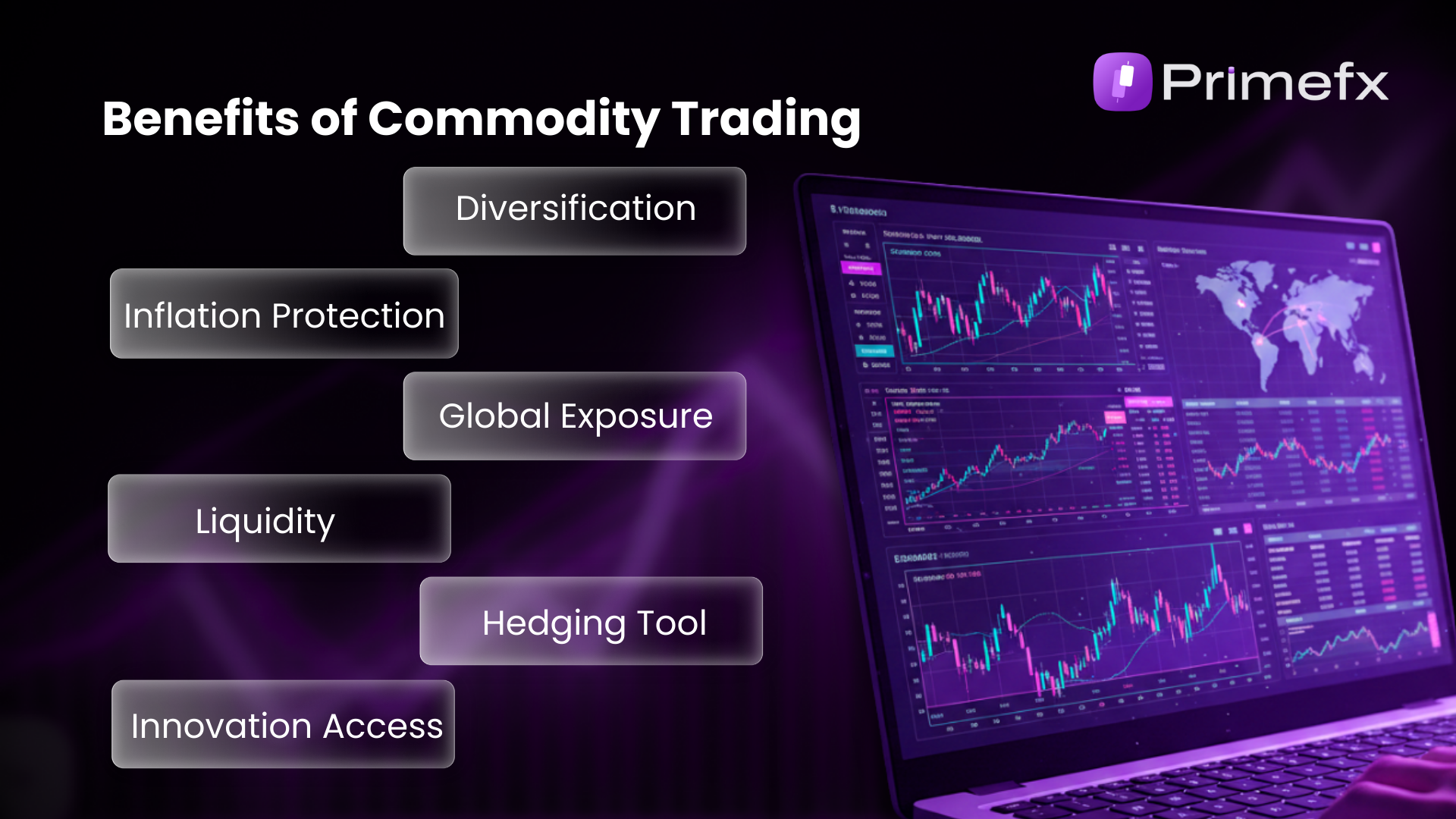
Diversification: Commodities provide portfolio balance by reducing dependence on stocks and bonds.
Inflation Protection: Assets such as gold and oil maintain their purchasing power during periods of inflation.
Global Exposure: Trading in commodities links the investors to global supply chains and economies.
Liquidity: Major commodities such as oil, gold, and wheat are very liquid; thus, entry and exit are easy.
Hedging Tool: Producers and consumers can stabilize prices and revenues by setting prices.
Innovation Access: New commodities (e.g., carbon credits, tokenized assets) provide access to emerging markets.
Trading in commodities might seem like a rat race of futures, ETFs, CFDs, and tokenized securities. It is the goal of Primefx to make that maze navigable.
· Guides and educational blogs simplifying the technical terms. See Primefx blogs fore more.
· Pictorial narration with infographics and charts that display tendencies on the first gaze.
· Explanations in the form of narratives to transform boring data into unforgettable teachings.
· Openness that fosters trust - clients do not only know what to trade but why.
To concisely put it, Primefx does not describe commodities but personifies them. It demonstrates how oil prices are geopolitical, how coffee futures are reflections of climate change, and how gold represents a millennium of human psychology.
Commodity trading is not merely speculation; it is a window into the world of supply chains, human cognition, and technological development. Commodities reflect the forces shaping our world. Whether hedging risks, investing strategically, or getting to know new markets, the knowledge of commodities will help you to navigate the ever-integrating financial environment of today with ease and certainty.
What is an example of a commodity trade?
A classic example is a wheat futures contract. A farmer sells wheat futures to lock in a price before harvest, while a cereal company like Kellogg’s buys the same contract to secure stable input costs. Neither party exchanges physical wheat immediately; they trade price certainty.
Can I make money trading commodities?
Yes, but it will be based on your approach, timing, and risk management. The traders profit by speculating on prices affected by supply shocks, geopolitical factors, or seasonal patterns. But high volatility and leverage imply that losses could be realized.
Is commodity trading safe?
Commodity trading is risky due to price volatility, leverage, and international shocks. Beginners should be content with ETFs or demo accounts, whereas intermediate traders can use futures and options, along with hedging strategies, to manage risk.
What are the top 3 commodities to invest in?
Crude oil, gold, and wheat are the most traded and invested commodities. All three are highly liquid and strategically important: oil is a gauge of global energy demand, gold is a hedge in times of crisis, and wheat is a food issue.
How do global events affect commodity prices?
Commodity prices are highly sensitive to global events. Wars may disrupt oil supply chains, droughts may reduce crop output, and pandemics may slow shipping routes. These shocks typically lead to sudden price spikes or declines; therefore, commodities are among the most event-driven asset classes.
Why do investors trade commodities instead of stocks or bonds?
To diversify portfolios and protect against inflation, investors turn to commodities. Commodities are not affected by stock or bond prices, as they depend on real-world demand for energy, food, and metals; therefore, they remain valuable in times of crisis when financial markets are volatile.
Who are the big four commodity traders?
Archer Daniels Midland (ADM), Bunge, Cargill, and Louis Dreyfus are the "ABCD" firms that dominate global agricultural commodity trading. These firms manage the supply chains, logistics, and pricing of grains, oilseeds, and other soft commodities worldwide.

Sofia Alvarez is a professional market analyst and trading educator at Primefx Signal, with over 8 years of experience in Forex, Gold (XAUUSD), and major indices. She specializes in price-action and risk-managed swing trading, combining technical analysis, macro news, and strict risk controls to build clear, rules-based strategies for retail traders. At Primefx Signal, Sofia oversees trade ideas, reviews performance data, and writes in-depth guides on risk management, broker selection, and trading psychology so traders understand not just the signals but the logic behind every setup. Outside of market hours, she mentors developing traders through webinars and Q&A sessions, focusing on discipline, transparency, and sustainable long-term results in highly volatile markets.